
“So, why do we practice Qigong?”
The Benefits of Qigong Practice
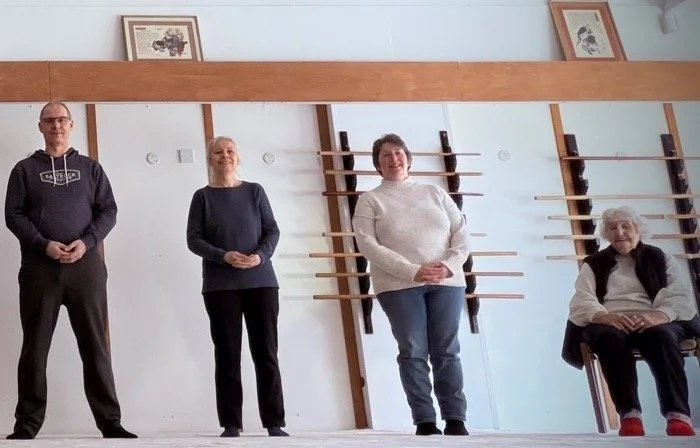
Research shows that mindful movements help the body and mind communicate more clearly, improving coordination and stability over time.
In Qigong, balance isn’t something we force—it’s something we allow.
As we soften, strengthen, and become more aware of our body in space, a quiet confidence begins to grow. We practice shifting our body weight from side to side and forwards and backwards, as well as holding stable positions for prolonged periods to build strength.
Studies have found that regular Qigong practice can improve steadiness and reduce the risk of falls, especially as we age.
But beyond the science, many people simply feel more grounded… more centred… more at home in their body.
And that sense of balance begins to flow into everyday life. We carry ourselves with more poise and our posture begins to open up.
Link to the Stourbridge falls study Simon talks about in his video snippet.
Balance, Co-ordination and Posture
Simon explains the benefits of Qigong practice for balance and coordination.
Through slow breathing and flowing movement, we begin to regulate the nervous system and invite the body into a state of ease.
Research suggests that Qigong practice can reduce anxiety, lower stress hormones, and support emotional balance.
In Qigong, we don’t push stress away—we allow it to settle.
With each exhale, there is an opportunity to let go… of tension, of worry, of what we’ve been holding.
Over time, many people experience a deeper sense of relaxation, improved sleep, and a greater feeling of inner steadiness.
It becomes more than a practice—it becomes a resource you can return to, again and again.
A way to come back to yourself… and to a quiet sense of peace within.
Mindfulness and Reduced Anxiety
Simon explains the benefits of Qigong practice around Mindfulness and Anxiety reduction.
Research suggests that practices like Qigong may support cognitive function—helping with memory, attention, and overall mental clarity, especially in the earlier stages.
Just as importantly, Qigong creates a calm, familiar rhythm—something that can feel reassuring in the midst of change.
It’s not a cure for Dementia or Alzheimer’s, but it can be a meaningful way to support the whole person.
For caregivers and loved ones, it can also offer a shared space of connection—simple and grounding.
A gentle way to bring ease, presence, and moments of clarity into the day.
Memory and Focus
Simon touches on some potential benefits for Qigong around Memory and Focus, especially with regards with Dementia.
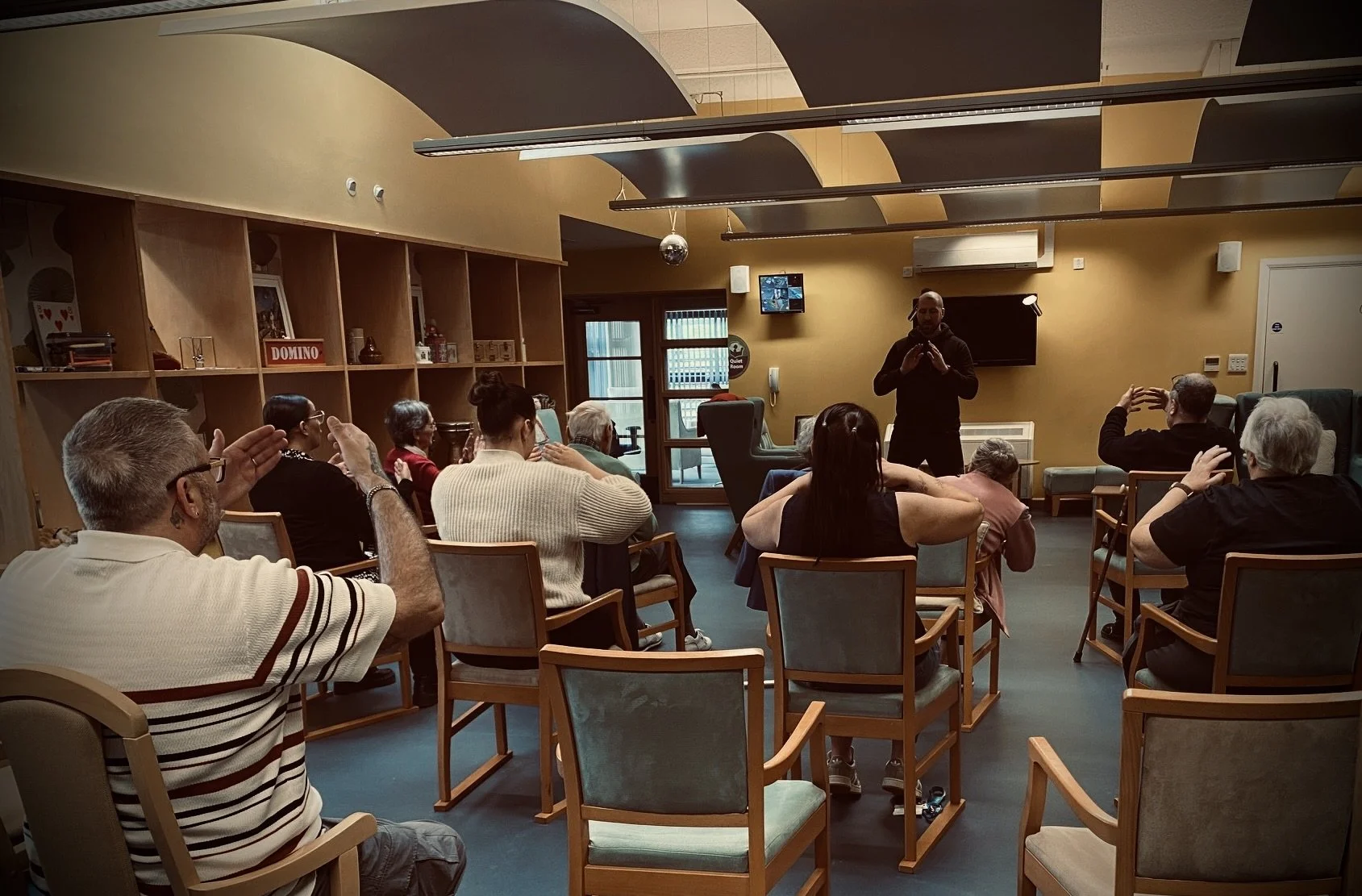
Clients & Staff at the Crystal Gateway Hub (Dementia Service) finding relaxation through Qigong.
Research Papers on Qigong
Guo Y et al. (2018). The effects of Tai Chi on mental health outcomes — Journal of Psychiatric Research
Howes, S. G. (2022) The effectiveness of an online Tai Chi Qigong practice for helping college students with ADHD transcend anxiety and move towards self- actualisation during the Covid-19 lockdown. Submitted for Masters Degree with UoB, unpublished.
Huang ZG et al. (2017). Health effects of Qigong exercise — Evidence-Based Complementary and Alternative Medicine
Lam LCW et al. (2012). A 1-year randomized controlled trial of Tai Chi for mild cognitive impairment — Journal of Alzheimer’s Disease
Liu X et al. (2015). The effect of Qigong on depressive and anxiety symptoms — Journal of Psychiatric Research
Oh B et al. (2010). A systematic review of Qigong for stress and anxiety — American Journal of Health Promotion.
Wu Y et al. (2019). Effects of mind–body exercise on cognitive function in older adults — Journal of the American Medical Directors Association
Wang F et al. (2014). The effect of Tai Chi on health outcomes in patients with chronic conditions — PLoS ONE
Wayne PM et al. (2014). Effect of Tai Chi on cognitive performance… (includes balance outcomes) — Journal of the American Geriatrics Society
Zheng G et al. (2019). Effect of Tai Chi and Qigong on cognitive function in older adults with mild cognitive impairment — systematic review, BMC Complementary and Alternative Medicine
Zou L et al. (2018). Effects of mind–body exercises on balance ability in older adults — International Journal of Environmental Research and Public Health.
Zou L et al. (2019). Mindfulness-based Baduanjin exercise… — International Journal of Environmental Research and Public Health.
Meet Your Instructor
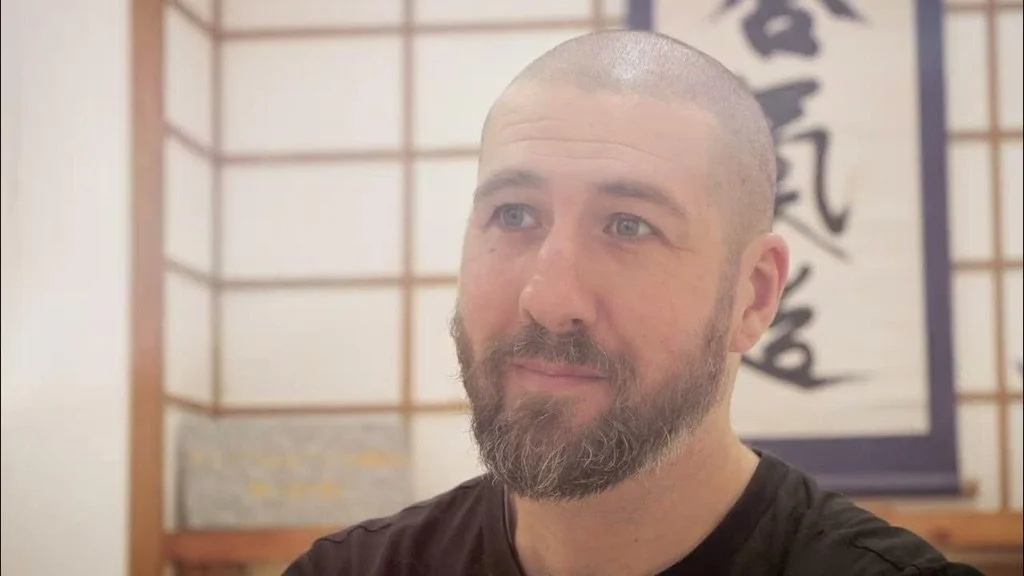
Simon began his Qigong journey back in early 2016, after being introduced to the Shibashi form by Supawan Green, an internationally renowned Meditation and Qigong Teacher. He has completed his Level 2 Qigong Instructor training, and is about to undertake an 18-month Qigong Teaching programme with Shiatsu College.
Simon is a lifelong educator with a passion for creating accessible and engaging learning experiences. Known for a calm, encouraging teaching style, Simon believes that growth happens when participants feel encouraged to explore the practice at their own pace, and are at ease in their environment.
Away from teaching, Simon writes a monthly blog about his attempts to lead a more mindful way of life. He enjoys bike rides on his single-speed, which usually means stopping off for carrot cake and coffee along the way!